All Categories
Featured
Table of Contents
We at Trade Data Monitor are paying attention to what's occurring by means of the prism of main trade data. It's a drastically various world than when I began covering trade for the Wall Street Journal 20 years back.
Shut out of the U.S., lots of Chinese exporters are discovering brand-new markets in Europe. Beijing is not giving up its export-dependent growth model, which in 2025 propelled the world's first-ever trillion-dollar trade surplus. Via our system for reverse engineering trade information, we can discern that Russia's import need is diminishing.
Most of the world has not given up on trade. In October, worldwide container volumes increased 2.1%.
Here are our leading trade trends to watch in 2026. The chip market is anticipated to reach around $750 billion in 2026 and hit $2 trillion by the early 2030s. In its most current version that pattern is being led by Asia. 8 of the world's top 10 exporters of chips, categorized under HS8541 and HS8542 are Asian.
Slowly, the world's roadway and filling stations are being rewired. One repercussion is flourishing trade in the vital minerals, like cobalt, manganese and nickel, required to construct electrical automobiles and batteries.
Is Your UK Business Ready for 2026 Trade?
The future of the U.S.-China trade relationship seems unpredictable at best. When we included up overall trade in between the 2 behemoths, the only sector has actually grew in 2025 was airplane.
delivered $12.5 billion of airplane and aircraft parts to China in the first 9 months of 2025, up 45% from the very same duration in 2024. At TDM, we have actually been talking about Vietnam's guarantee for a years, so we're not amazed to see its strong export numbers. The amazing thing about Vietnam isn't that it has actually ended up being an export maker, it's that its manufacturing capability has actually increased throughout so broad a base.
The IMF and other institutions anticipate Russian GDP development of just around 1% in 2026. The most significant beneficiary of the U.S.'s trade war with China has been Mexico.
import data paint an image. Now with the world's biggest population, India has actually now surpassed Japan as the world's 4th most significant economy, behind the U.S., China and Germany. Its top market: the U.S., followed by UAE and the Netherlands. Trade coverage concentrates on the big nations, but we've been studying smaller players, and one fascinating case research study is Egypt.
In 2025, Egypt clocked the biggest boost in garments exports, shipping out $2.6 billion in the first nine months of 2025, 30.7% more than the year before. The 2nd greatest boost was signed up by Cambodia at 16.9%, and no other nation enhanced by double digits. America is a substantial continental economy with lots of unique economic areas and sea- and airports.
Logistics Reports and British Industry Growth
Texas and California are still the biggest exporters in general, however New York leads the race in year-on, because of its trade in physical gold. Arizona ranks 2nd since of its electronics trade with Mexico. 5 News Stories To Comprehend This Minute in Global Trade With tariffs still beating down optimism over international trade, it's easy to get dragged down by the political story of modern-day commerce.
As the international economy continues to evolve, worldwide trade is going into a brand-new period defined by digital improvement, sustainability, and geopolitical realignment. Companies, policymakers, and financiers are all adjusting to altering customer habits, emerging innovations, and ecological pressures that are reshaping supply chains worldwide. By 2026, trade will no longer be driven solely by expense performance or market growth but by resilience, development, and ethical practices.
Human Capital Acquisition Tactics for Global Growth
Read also: The Function of Sustainable Practices in Modern Global Trade One of the most significant shifts in worldwide trade is the approach regionalized supply chains. The disruptions caused by the COVID-19 pandemic, coupled with geopolitical stress and transport challenges, have actually pressed companies to diversify production and sourcing. Instead of relying heavily on far-off production centers, companies are building networks closer to key markets to improve versatility and reduce risk.
Strategic Expansion Roadmaps for British Leaders in 2026European business are increasing production in Eastern Europe and North Africa to shorten supply lines. In Asia, countries like Vietnam, India, and Indonesia are becoming alternative production destinations, decreasing dependence on China while preserving access to skilled labor and competitive costs. This pattern toward localization not only enhances supply chain resilience but also supports regional trade contracts, permitting companies to react more efficiently to shifting demand and regulatory changes.
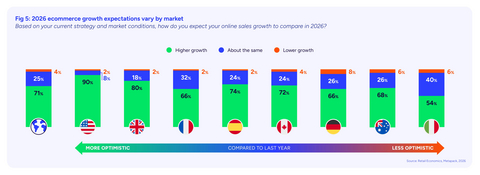
Expert system (AI), blockchain, and big information analytics are ending up being main tools for improving trade performance and decision-making. AI-driven forecasting permits business to anticipate need fluctuations, handle inventory, and optimize logistics, while blockchain improves transparency and security in worldwide transactions. E-commerce platforms are likewise accelerating global trade by giving little and medium-sized business (SMEs) access to worldwide markets.
By 2026, digital trade is expected to represent an even bigger share of worldwide commerce, allowing organizations to reach consumers straight without counting on standard intermediaries. As digital trade grows, so does the need for harmonized worldwide regulations and stronger cybersecurity frameworks. Nations are working to establish typical requirements for data sharing and digital taxation to make sure fair and protected global deals.
With climate change driving more stringent ecological policies, companies are being held responsible for their carbon footprints throughout the supply chain. Governments and worldwide organizations are presenting carbon border taxes, green shipping initiatives, and environmental compliance requirements that affect how products are produced and transferred. The principle of "green trade" highlights making use of renewable resource, sustainable products, and low-emission transportation systems in manufacturing and logistics.
Meeting to ESG Mandates in the 2026 Economy
Renewable resource financial investments, circular economy practices, and sustainable product packaging innovations are assisting markets transition to environmentally friendly trade operations. These efforts are not just lowering environmental impact but likewise enhancing brand name track record and consumer loyalty in a progressively conscious marketplace. Worldwide sell 2026 is being shaped by a shifting geopolitical landscape.

Latest Posts
Essential Leadership Tips for Scaling UK Enterprises
Top Business Success Strategies for UK Leaders
Why AI Innovation Scale for British Success