All Categories
Featured

How Digital Innovation Optimises Workflows for 2026
Table of Contents
Starmer and Reeves are eager to take actions to lower the cost of living a significant concern for voters and the Sun newspaper reported over the weekend that Reeves was poised to reveal she would scrap an increase in fuel tax prepared for September. The IMF stated any energy subsidies ought to be targeted and short-term, and funded by tax rises or spending cuts rather than new borrowing." Remaining the course on deficit reduction will be essential given market pressures and raised implementation threats," it said.
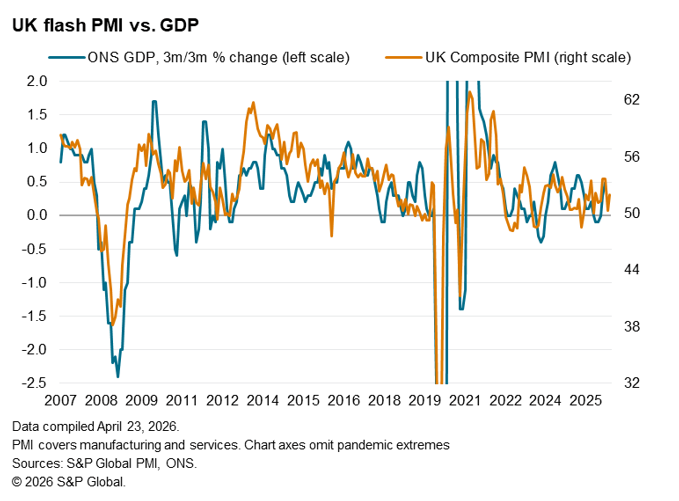
The Fund sounded a note of care about Reeves' push to simplify financial policy, saying care required to be required to make sure that the cumulative impact of a raft of present and proposed measures did not damage the financial system. The IMF's April projections represented a 0.5-percentage-point cut from a previous projection for British growth in 2026.
The smaller 0.3-percentage-point downgrade announced on Monday was the same as Germany's downgrade in the April report. REUTERS.
A leading economic forecaster says the UK economy will recuperate well in 2018, thanks to a strong global economy and a relative easing of concerns over Brexit. The National Institute of Economic and Social Research Study (NIESR), Britain's oldest independent financial research institute, has modified its development forecast upwards for the UK economy and is now forecasting GDP growth of 1.9 percent in both 2018 and 2019.
Referring to the effective conclusion of "phase one" of the EU-UK Brexit talks in mid-December, the NIESR said that had "helped lift some of the unpredictability that has actually weighed down on organization financial investment." In regards to the buoyant international financial conditions and the fact of a weakened pound () it stated that the resultant circumstance of UK net trade "will continue to make a sizeable contribution to economic growth, assisting the economy rebalance away from domestic demand over the next two years." The forecast of almost 2 percent growth in 2018 is substantially more optimistic than that of other forecasters, such as the World Bank and the International Monetary Fund, which recently predicted UK 2018 growth rates of 1.4 percent and 1.5 percent respectively.
Why Workforce Optimisation Accelerates UK Mid-Market Growth
While the very first phase of talks did conclude serenely enough at the end of 2017, significant doubts remain on both the Brussels and London sides over the last result, with lots of uncertainty remaining over the Irish border and the kind of trading relationship the UK and EU will have after March 2019, when the UK formally leaves.
Find out more: "That high level of market gain access to will, in our view, come at a cost. We presume that the UK continues to make a budgetary contribution to the EU as previously and net migration remains untouched." The report makes clear how critical the result of Brexit is to UK economic well-being.
Accessing Corporate Funding in the Competitive UK EconomyV. Wijngaert While the general tone of the assessment is positive, the report makes strikingly clear simply how crucial the result of Brexit is to general UK financial wellness. In a "no-deal" scenario, where the UK goes back to World Trade Company (WTO) trading rules, the NIESR forecasts that UK people would suffer an annual GDP loss of up to 2,000 ($ 2,782 or 2,252) per individual corresponding to around 6 percent of present figures.
Modern Banking Strategies for British Growth Markets
A November analysis by the Bank of England discovered that if an unpleasant Brexit was integrated with a global economic crisis, UK banks would likely go under. Despite current stock market dips, a world recession looks a way off and it is the currently intense international outlook which underpins this brand-new optimism for the UK The global recovery has actually been "crucial" to the latest outlook the report says, having actually already helped raise numerous projections since the preliminary after-effects of the June 2016 referendum.
The NIESR anticipates the Bank of England to raise UK rate of interest in May and to do so every 6 months thereafter, in an expectation of continuing normalization of lending and loaning conditions. To view this video please make it possible for JavaScript, and consider updating to a web internet browser that supports HTML5 video Customer costs has fallen in the UK, while inflation is also anticipated to fall in 2018.
The report likewise consists of a worldwide forecast. Noting that the world economy is growing at its fastest rate in nearly a decade, the NIESR has actually revised its worldwide estimates up and predicts growth of 3.9 percent in 2018, up 0.2 from 2017. Issues are also kept in mind over high levels of worldwide insolvency, increasing talk of protectionism in worldwide trade and over geopolitical tensions.
The commentary presented is not a projection or forecast.
Driving International Mid-Market Expansion for the UK
Fifth Floor, 100 Victoria StreetCardinal PlaceLondon.

Latest Posts

Mastering British Expansion in the Global Market
Essential Leadership Tips for Scaling UK Enterprises
Steps to Leverage Next-Gen AI in 2026